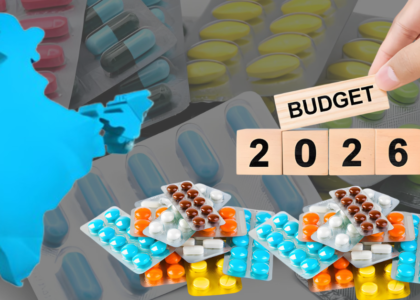




In a year where India’s Union Budget 2026-27 aimed to balance fiscal prudence with transformative growth, one of the more intriguing developments has been the enhanced focus on the nation’s pharmaceutical landscape. Against a backdrop of global competition, rising healthcare demands, and supply-chain vulnerabilities exposed by pandemics, the Department of Pharmaceuticals (DoP) has emerged as a crucial pivot in the government’s economic and healthcare strategy. The latest budget allocations tell a compelling story — one of ambition, recalibration, and a determined shift toward innovation and self-reliance.
🧪 A Leap Forward: Rs. 5,931 Crore for the Department of Pharmaceuticals
The Union Budget 2026-27 has allocated Rs. 5,931.22 crore to the Department of Pharmaceuticals — a healthy increase of about 12.6% over the previous year’s estimate. This rise signals that the central government views the pharmaceutical sector not just as a health necessity, but as a strategic engine of economic growth and global competitiveness.
While on the surface this may seem like another number in the fiscal matrix, it’s worth unpacking what this expanded allocation could mean for India’s healthcare economy.
🚀 Driving Innovation: The Rs. 1,100 Crore New Scheme Push
One of the standout features of the new budget is the Rs. 1,100 crore earmarked for two new strategic schemes:
- Rs. 500 crore for Biopharma Shakti: envisioned to strengthen India as a global biopharmaceutical manufacturing hub. This initiative focuses on fostering domestic production of biologics and biosimilars, reducing dependency on imports, and enabling Indian firms to compete in cutting-edge drug development.
- Rs. 600 crore for Chemical Parks: designed to set up three dedicated chemical parks on a cluster-based plug-and-play model. These parks aim to lower input costs, boost domestic chemical and pharmaceutical intermediates production, and attract investment into high-value manufacturing units.
Together, these initiatives are not merely about fiscal numbers. They represent a strategic vision to pivot India from being a global supplier of generic drugs to a global innovator in high-end biopharma and chemical production.
📈 PLI Schemes: Incremental Growth with Real Impact
Production Linked Incentive (PLI) schemes — central to boosting domestic manufacturing — have also received continued support, with a total allocation of Rs. 2,499.84 crore. While this is a modest increase of about 2.2% compared to previous budget estimates, it underscores consistent backing for reducing import dependence and enhancing homegrown capacity.
Specific components of the PLI allocations include:
- Roughly Rs. 66.40 crore for bulk drug incentives, up from Rs. 40 crore previously.
- Expansion in allocations for domestic medical device manufacturing.
These incentives are meaningful: recent reports suggest that previous PLI drives have already helped avoid substantial import costs by ramping up domestic production of key raw materials and APIs — a testament to how these schemes can build resilience into supply chains.
🧠 R&D and Innovation: Funding the Future
Another smart move by the government has been to boost funding for research and innovation. The Promotion of Research and Innovation in Pharma and MedTech (PRIP) will now have an allocation of Rs. 750 crore, far higher than the previous year’s Rs. 245 crore. This is not just budget growth — it’s a declaration that India must invest in future technologies and clinical breakthroughs to ascend the global pharma value chain.
⚖️ Balancing Acts: What Fell and What Rose
It’s also worth noting that not all schemes saw increases. Longstanding programs such as Jan Aushadhi (aimed at affordable medicines) and some segments of the Strengthening of Medical Devices Industry experienced reductions in allocation. While this may raise eyebrows among public health advocates, it reflects a broader trend in the budget: prioritizing high-impact, scalable growth areas that could yield larger systemic benefits in the long run.
🏁 The Bigger Picture
The Rs. 1,100 crore infusion into new schemes, alongside a 12.6% growth in overall DoP allocation, tells a story of ambition anchored in strategic pragmatism. This budget doesn’t just patch holes; it attempts to build wings — aiming for a future where India is not only self-sufficient in medicines but is also a global powerhouse in pharmaceutical innovation.
From biotechnology hubs to chemical parks and incentives for cutting-edge research, this budget positions the pharmaceutical industry as a central pillar of India’s economic and healthcare aspirations.
In a fragmented global pharma environment, that’s a bold, forward-thinking stance.